
What historic Iranian technology does Donald Trump (and most of the world) use almost everyday? Find out here. Come on a well-shod stroll into the history of men’s shoes.
Why shoes? I just got a new pair for Mothers Day. Then I started researching historical styles, and I was carried away — much like the girl in Hans Christian Anderson’s ‘The Red Shoes’. After all, the human race runs on shoes! Like many everyday objects, footwear styles are loaded with meaning. Shoes say a lot about their owner’s lifestyle and aspirations. (All puns in this newsletter are fully intended. Much spit and polish goes into these posts. 😊)
Medieval Sharps
Most of this post is about early modern European shoes. But so you know where they came from, here are some noble French lads in the late 1400s:
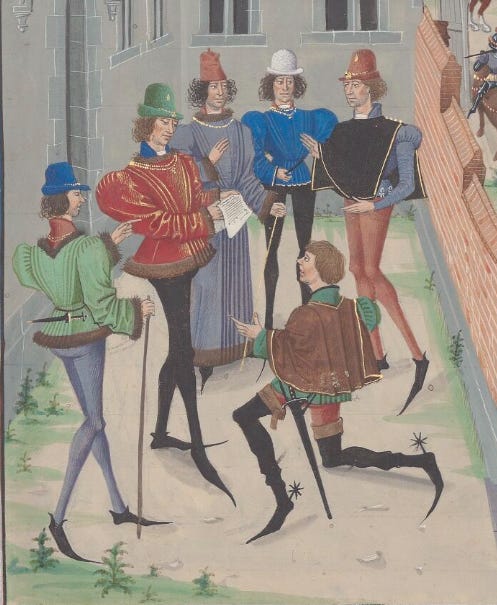
A very sharp look. Called ‘krakows’, or ‘poulaines’, these medieval marvels were the ultimate in pointy toes. No, they were not practical. The men who wore these didn’t have to labour in the fields — that was the point. 😉
They weren’t comfortable either. Archaeologists discovered that the incidence of bunions (big toe deformities) increased fourfold, to 27%, when krakows were in.1 Ouch.
By Henry VIII’s day, shoes were back to blunt.
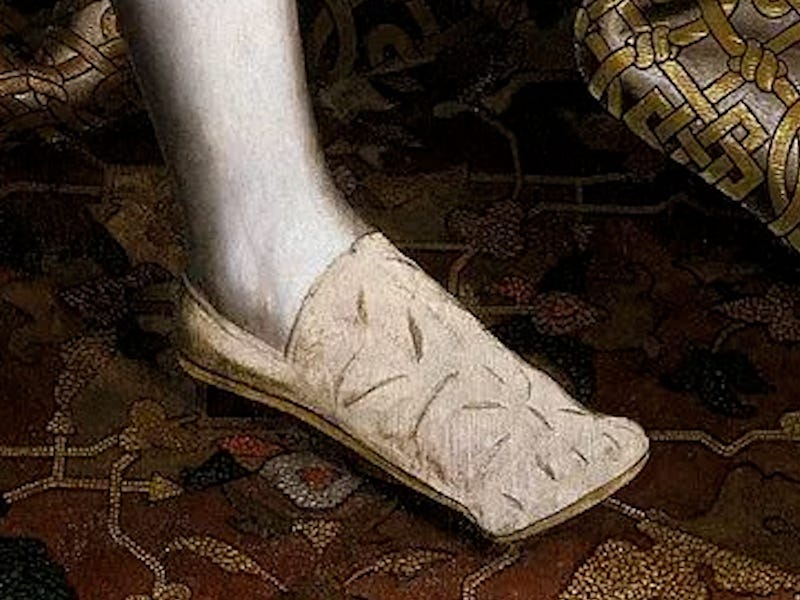
And still flat. Like bedroom slippers, to our eyes.
The Iranian Innovation
The stirrup had already come to Europe via Central Asia, some centuries back. (Possibly from China.) Stirrups made it much easier to fight on horseback — riders could stabilise themselves, and so shoot or fight much better in the saddle.
What do stirrups have to do with shoes? This: by the end of the medieval period, Persian riders had found a simple way of keeping their feet from slipping in the stirrup loops — heels. It worked. Shah Abbas (1588-1629) commanded the largest cavalry in the world.
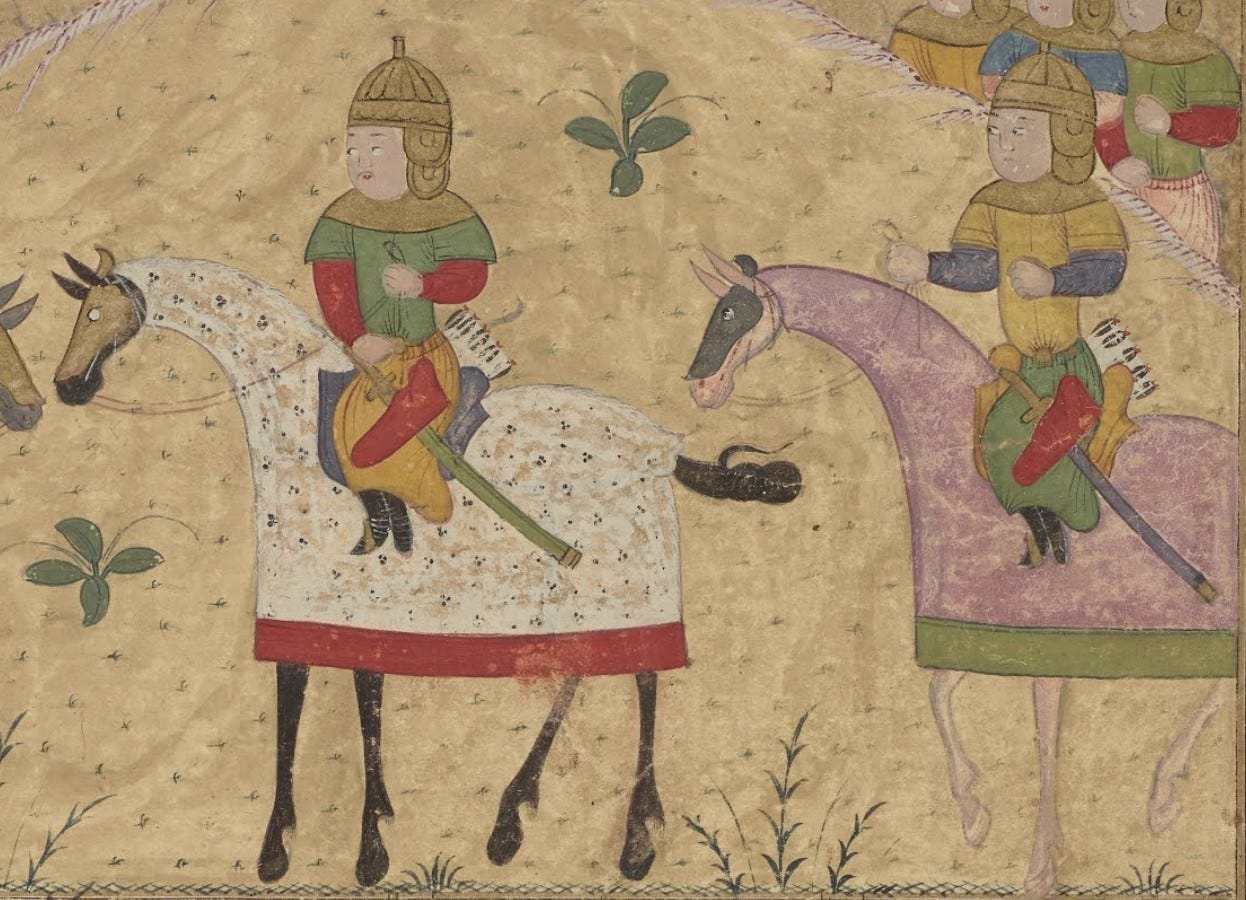
The courts of Europe were impressed. Heels became a symbol of elite masculinity in Europe too. The shoe below is a boy’s, not a woman’s.
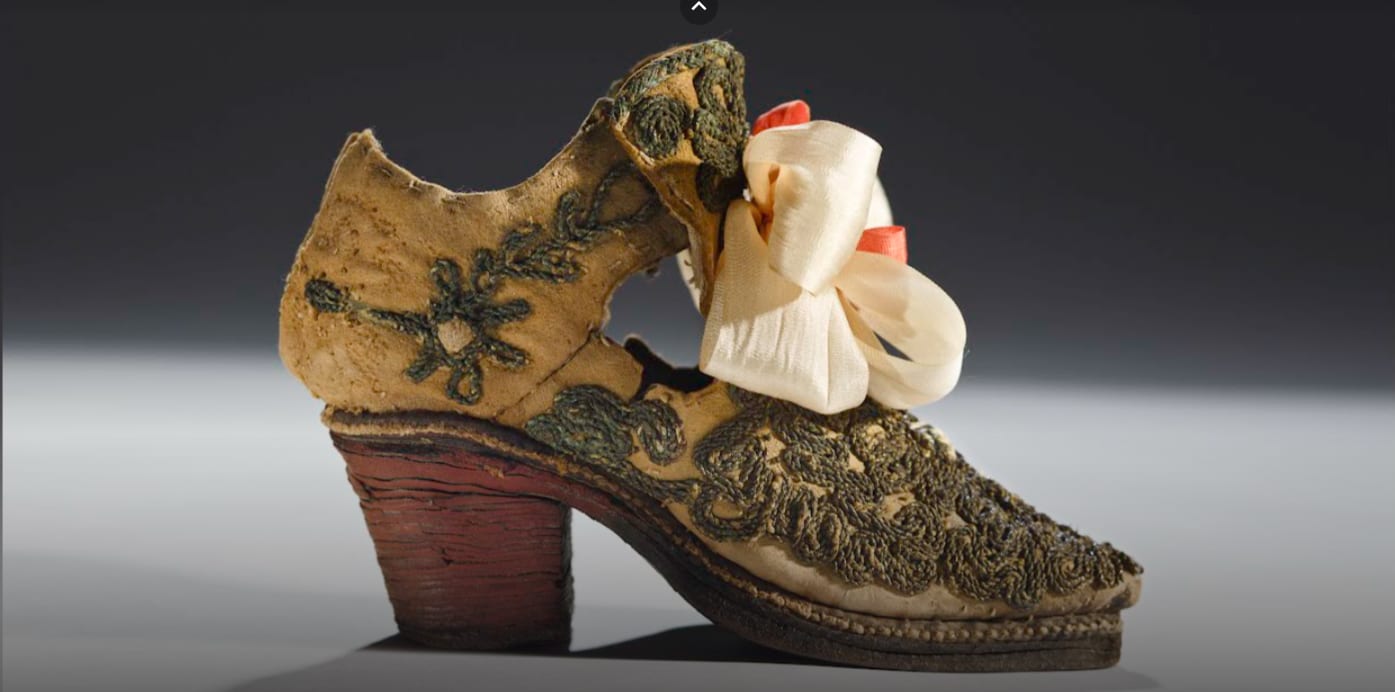
Like pointy medieval poulaines, these shoes are literally for the well-heeled. Think English cavaliers and the court of Louis XIV. That’s the look — swaggering and showy. But it didn’t last into the modern era.
Away with Foppery - Huzzah!
The next cycle of fashion, shoes included, was helped along by the French Revolution. Donning aristocratic dress was positively dangerous, in France at least. Then, as Napoleon swept through Europe, the male look turned decidedly military. High heels were passe, although as part of shoe structure, heels were here to stay. The nineteenth century was the hey-day of the boot.
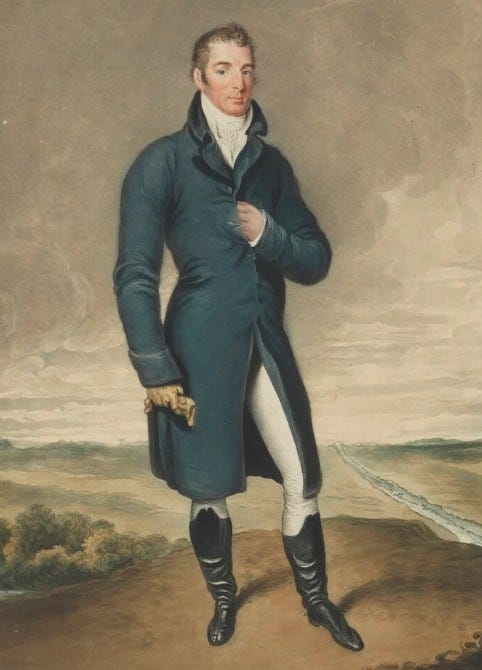
England’s war hero, the Duke of Wellington, (pictured above), had a new, practical style designed by his shoemaker. His boots were so well known they came to identify him.
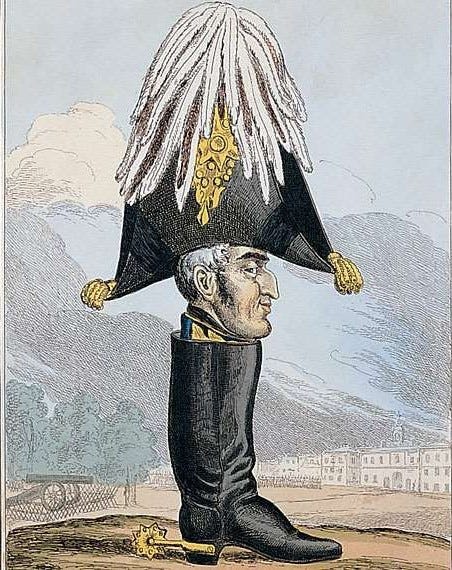
When asked the most important part of a soldier’s equipment, the Duke of Wellington was said to reply, ‘Firstly, a pair of good shoes, second a pair of good shoes, and thirdly a pair of half-soles.’
A couple of decades after the Napoleonic wars, military influence waned. Boots disappeared under trousers. Mostly.
‘The top boot is almost entirely a sporting fashion ... Although they are worn by noblemen and gentlemen in hunting, they are in general use among the lower orders, such as jockeys, grooms, butlers.’
The Whole Art of Dress, or, The Road to Elegance and Fashion (1830)
No gentleman wanted to be mistaken for a member of the lower orders because of his shoes. So boots got shorter. Shoes shifted closer to modern styles, with fancy variations on the way.
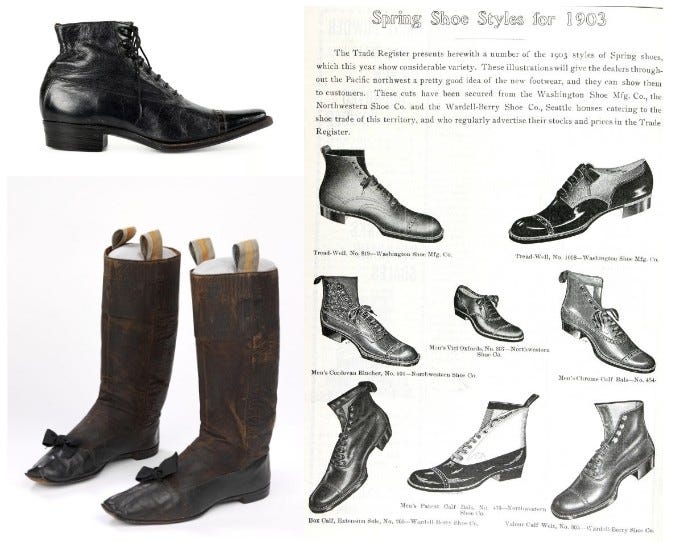
At the end of the Victorian era, we get to a half shoe with a built-in canvas sock:
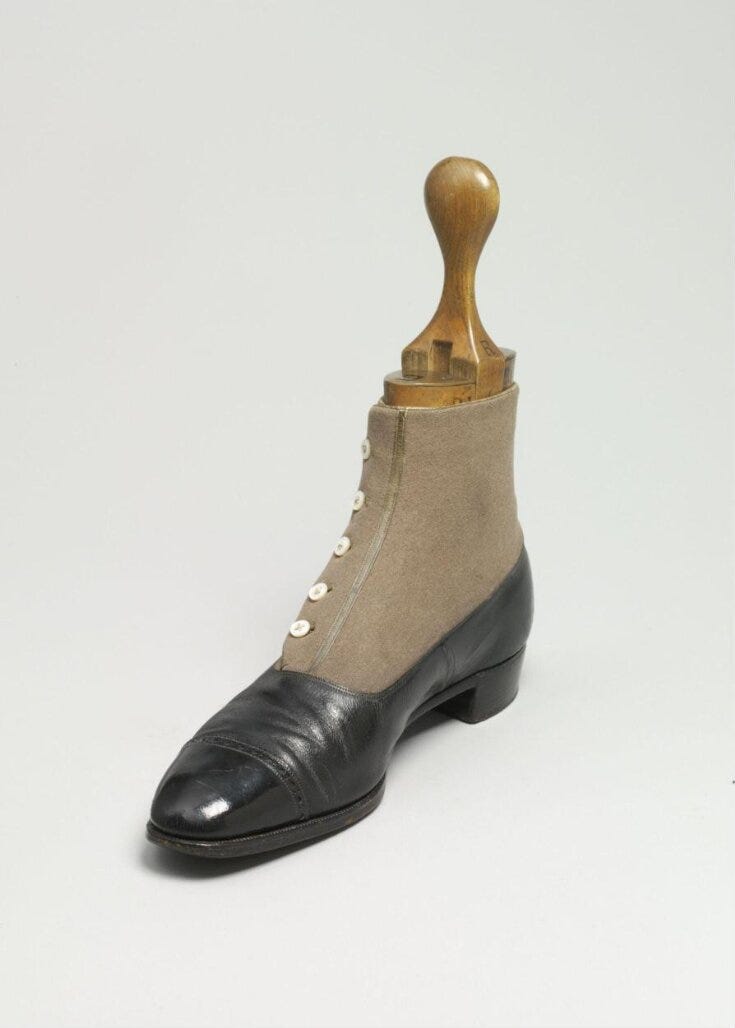
This isn’t a style for horse-riding, marching, or manual labour. It’s a style to look stylish. Even for cats, as poet T.S. Eliot humorously imagines:
…In the whole of St. James’s the smartest of names is
The name of this Brummell of Cats;
And we’re all of us proud to be nodded or bowed to
By Bustopher Jones in white spats!
T.S. Eliot, 1939
The Importance of Shoes
When the Duke of Wellington listed shoes first, second and third on his materiel list, he didn’t just have a footwear fetish. Shoes were essential equipment. Leatherwork and shoe-making were a critical part of the nineteenth century economy.
Leather was the plastic of the day. ‘If we look on the implements used in most mechanical trades, on the structure of a multitude of engines and machines… even the substance of our carriages, what do we see but… leather?’2
So Who Made Mens Shoes?
If, like me, you’ve read a lot of fairytales, and you thought shoes were made by “cobblers”… not exactly. Cobblers were bottom of the industry, cobbling together old leather for shoe repairs. ‘Cordwainers’ were the pros. Apprenticed for years, they were experts in leather cutting, shoe shaping, stitching and finishing.
In 1841, there were 28,000 shoemakers in London. It was the third largest profession, after servants and general labourers. More than clerks (20,000) and brickmakers (6,500). Journalist and reformer Henry Mayhew calculated that about 2000 of the 28,000 total were master bootmakers, who employed the rest. The best of them could turn out a quality shoe in a day. Uppers were commonly sewn at 18-22 stitches per inch, but on exhibition pieces the sewing could be as fine as 50-60 stitches per inch.
But as the Industrial Revolution took hold, the supply of labour in the city swelled. Factories began to compete with custom-made shoes. Mayhew interviewed ‘an intelligent member of the West End trade’:
I am a boot-closer, working for the best shop. I am not fully employed… I get the best prices… I can earn with comfort 27 shillings a week when I can get it. To do that much, however, I must sit at my work for 14 hours every day.
London shoemaker, 1850
The Manufactured Reputation behind an Exclusive Brand
About the same time as Mayhew was writing, a young Cornish shoemaker set out to make his fortune in London. He was permanently lame, after badly breaking a leg doing farm labour. Yet he walked the 300 miles from his home to the city. When he got there, nobody would employ him. So, around 1849, he set sail for the colony of New South Wales, Australia.3
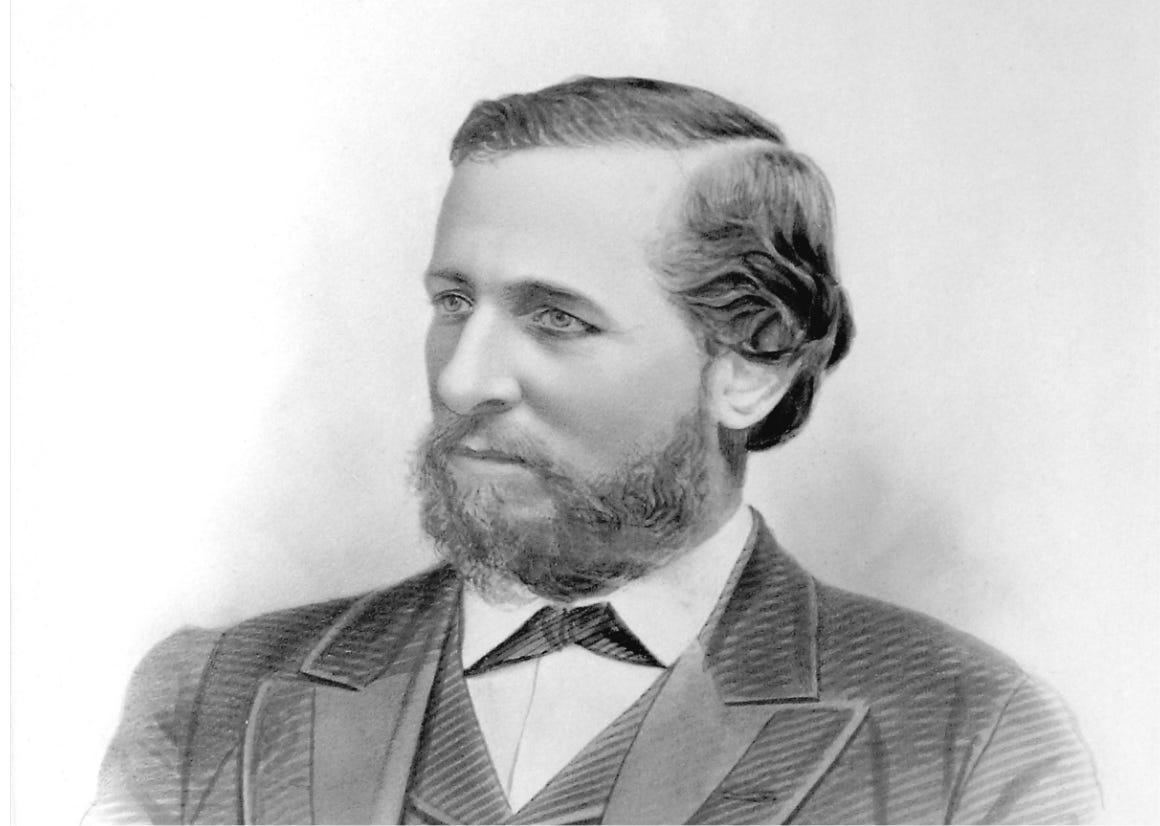
The young Cornishman was in luck. He arrived in time for the start of the Gold Rush in 1851. Like everyone else, he took himself to the diggings. Like most people, he found very little gold. But he did discover a big demand for stout shoes. He went one up on the Persians, and innovated an extra feature into his shoes. He made the heels with a hidden cavity. On the lawless gold fields, these shoes were very handy for stashing gold finds — to give crime the boot, so to speak.
By 1854, the young shoemaker had left the goldfields. He had enough capital to start a business in Sydney, importing shoes as well as making them. This is where his name appears on the public record for the first time.
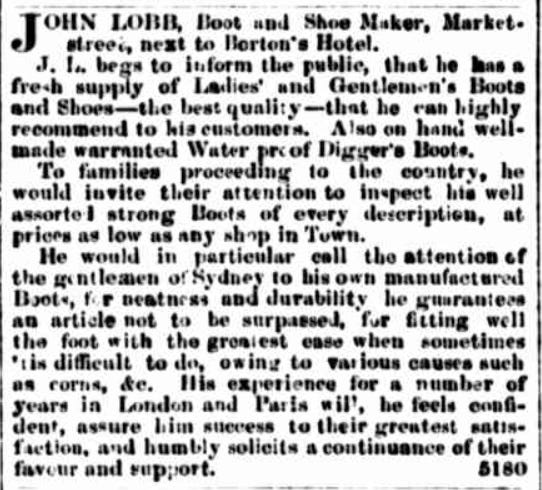
His ‘experience for a number of years in London and Paris’? That doesn’t fit what we know of his life story, as I’ve outlined it. John Lobb’s claims appear to be a fabrication, as hollow as his boot heels.
His grandson said Lobb was ‘wily enough for anything’.4 Somehow, from the other side of the world, Lobb obtained the shoe measurements of the Prince of Wales. In 1863 he crafted the Prince a magnificent pair of handstitched boots, and sent them back to England by sailing ship. The Prince was impressed enough to grant a Royal Warrant to the maker.
With that honour up his sleeve, John Lobb bought a ticket back to London in 1866. No doubt to the astonishment of London competitors, he set up shop in the prestigious Regent St, and hung up his shingle: ‘By appointment to HRH the Prince of Wales’. (Have a close look at the window arches below).
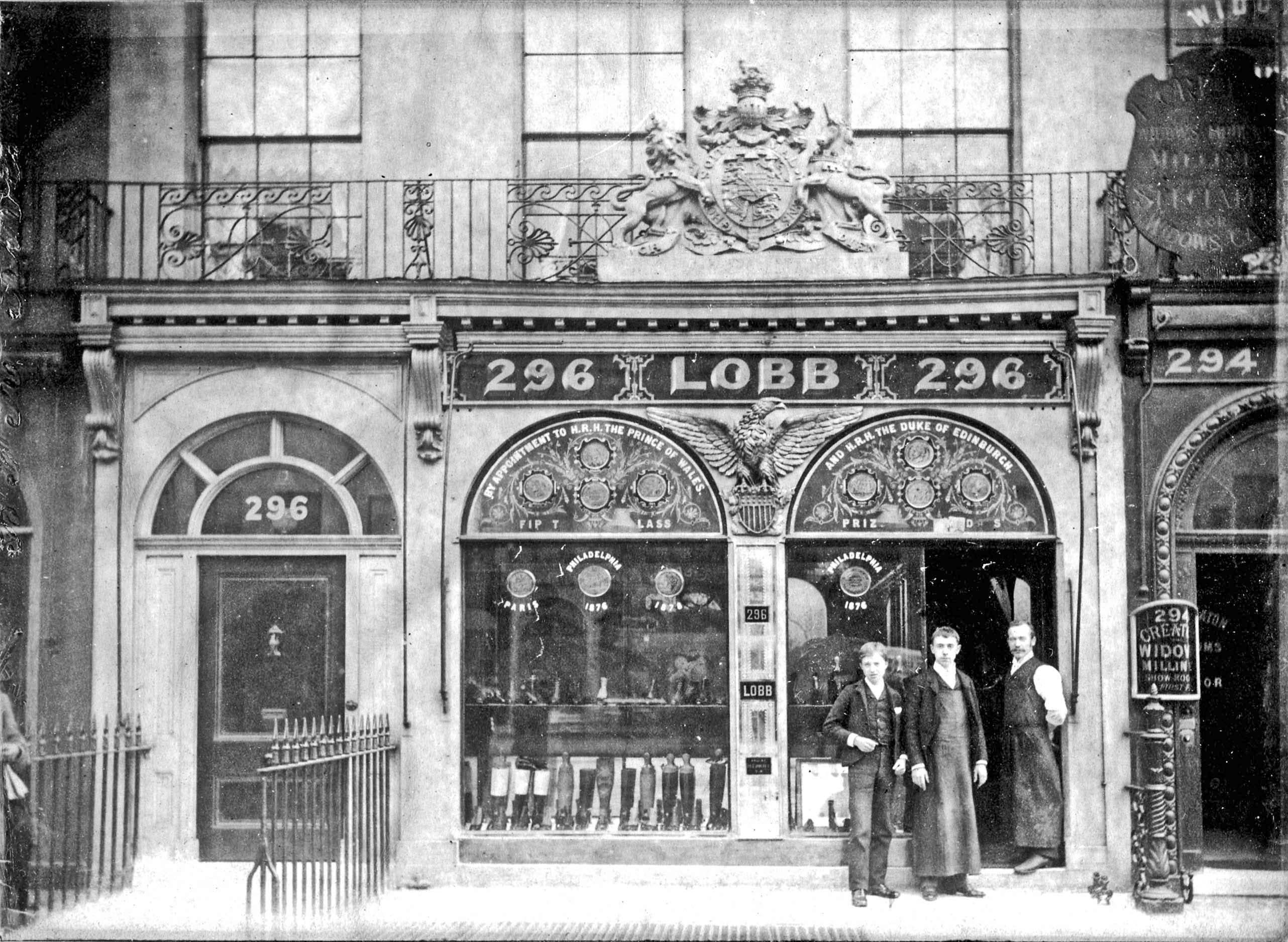
To this day, John Lobb’s firm is still serving the most exclusive of clientele. Most of us don’t get to wear their creations. But even our everyday shoes are the product of centuries of craftsmanship and innovation. If the shoe fits… you’re wearing history.
https://theconversation.com/fashion-for-pointy-shoes-unleashed-a-wave-of-bunions-in-medieval-england-162570
John Campbell, A Political Survey of Britain, 1775. Quoted in a syndicated article in the Hobart Mercury, 16 August 1862.
I haven’t found out exactly when. The biography I relied on for some of this information, The Last Shall be First by Brian Dobbs, is entertaining and informative, but blurry on dates and sources.
The Last Shall be First, p45.