
There is a LOT of historical fiction out in the world. With a LOT of variety in style and content. What to choose?
If you know what you like, you’re less likely to waste time reading books that don’t do it for you. So I thought it might be useful to describe the different types of historical fiction available. Even if you’ve been a long time fan of historical fiction, I hope there are some new gems in here, or old favourites to revisit.
I’m not analysing by setting, so much as style and content. I have included both old and new novels. As a history junkie, I don’t believe newer = better. Let’s start at the top, prize-wise:
1. Literary Historical Fiction
Literary fiction prioritises language and ideas, sometimes (frequently!) to the detriment of story. Name of the Rose, by Umberto Eco is often given as a prime example. Set in a medieval monastery, this novel feels like literary theory in monks’ robes and gilt lettering.
Another prize-winner, from my end of the world, is Kate Grenville’s The Secret River, about the confrontation between Australia’s convicts and indigenous people. Beautiful prose, but the narrative winds slower than the river.
To my mind, there are better literary historical fiction reads. Like: the Wolf Hall Tudor trilogy by Hilary Mantel, The Leopard by Giuseppe Lampedusa, and Beloved by Toni Morrison.


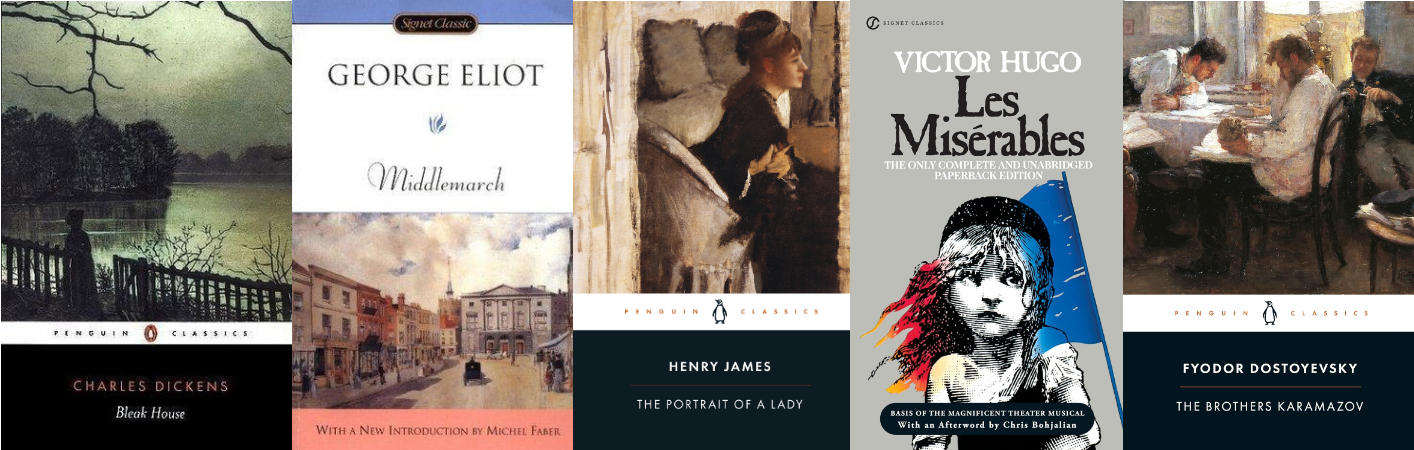
2. The Classics
Most of these novels were not historical when they were written, but they’re certainly historical to modern readers. I think the classics are best approached as entering another culture — you’ll find much to surprise and delight, but you have to remember past expectations of fiction were different. These books are lo-o-ong. Like historical costumes, their vocabulary and grammar is elaborate. They take a bit of getting used to, but they say deeply interesting things about humanity. (I could go on. Perhaps I will, in a later post.)
3. Historical Romance
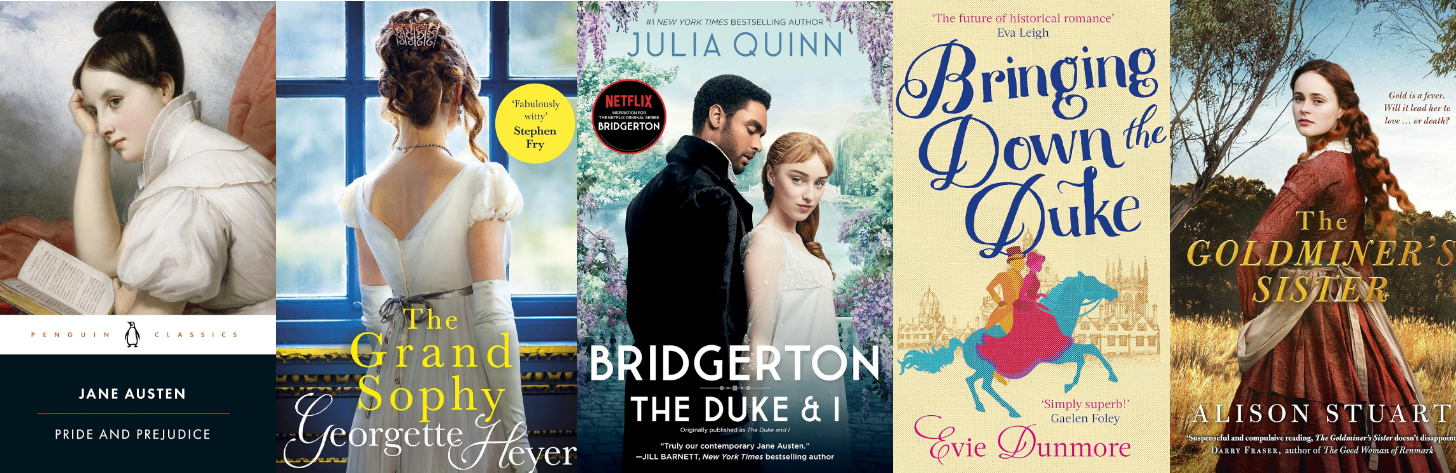
Inspired by Jane Austen, these stories have become a whole genre on their own. Georgette Heyer started the genre off in the twentieth century with her swashbuckling dukes and witty maidens. Historical verisimilitude has been merrily tossed out the stagecoach window, in pursuit of passion and improbable adventure. They’re fun, but most are more fantasy than history. Bridgerton belongs here.
My favourites are the ones that have a solid historical story to go with the romance.
Want to try a historical romance for free? Click the promo below. I’ve got a short story in there too:

4. Historical Crime & Thrillers
Sherlock Holmes and Agatha Christie shot this genre to prominence. Like the nineteenth century novelists in the category above, Conan Doyle and Christie originally had contemporary settings, but the stories feel historical to us.
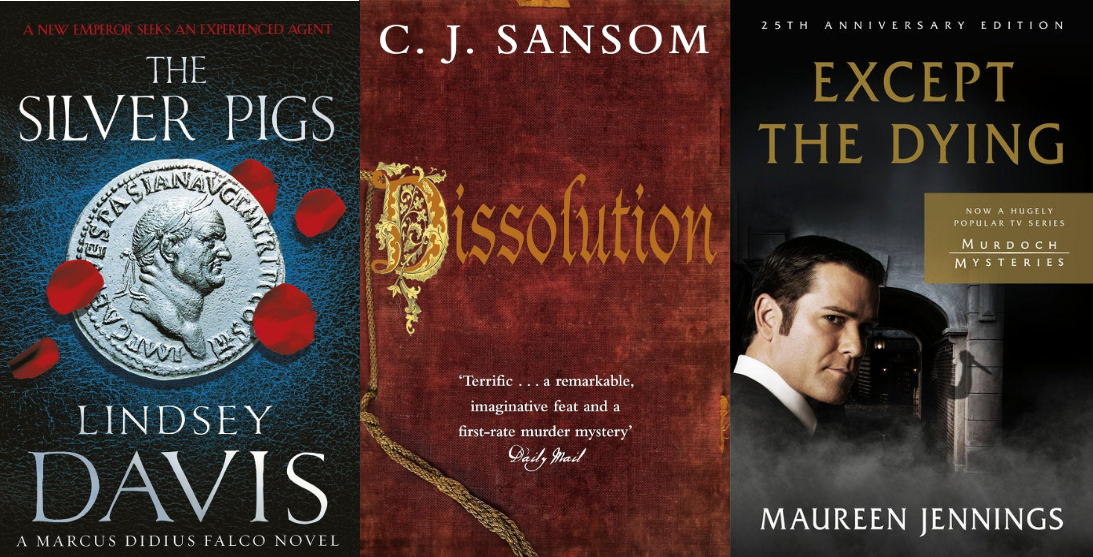
Nowadays you can find fictional sleuths digging up corpses in every era, from Roman to colonial. Like romance, it’s a huge field (with a lot of dead bodies!). I like C.J. Sansom’s Dissolution, which is similar to a faster-paced Wolf Hall — lots of murder and murky Tudor politics. In the equally cut-throat setting of imperial Rome, Lindsey Davis’ Marcus Didius Falco is a wise-cracking, disaster-prone private investigator. From the other side of the world, circa 1900, Toronto’s Station House 4 entertains a global audience, in a 19-season(!) TV series. (That will give you about 300 hours to watch. Plenty.)
If crime is your vibe, take a look at these historical crime and thriller novels, currently available for free:

5. World War (mostly II)
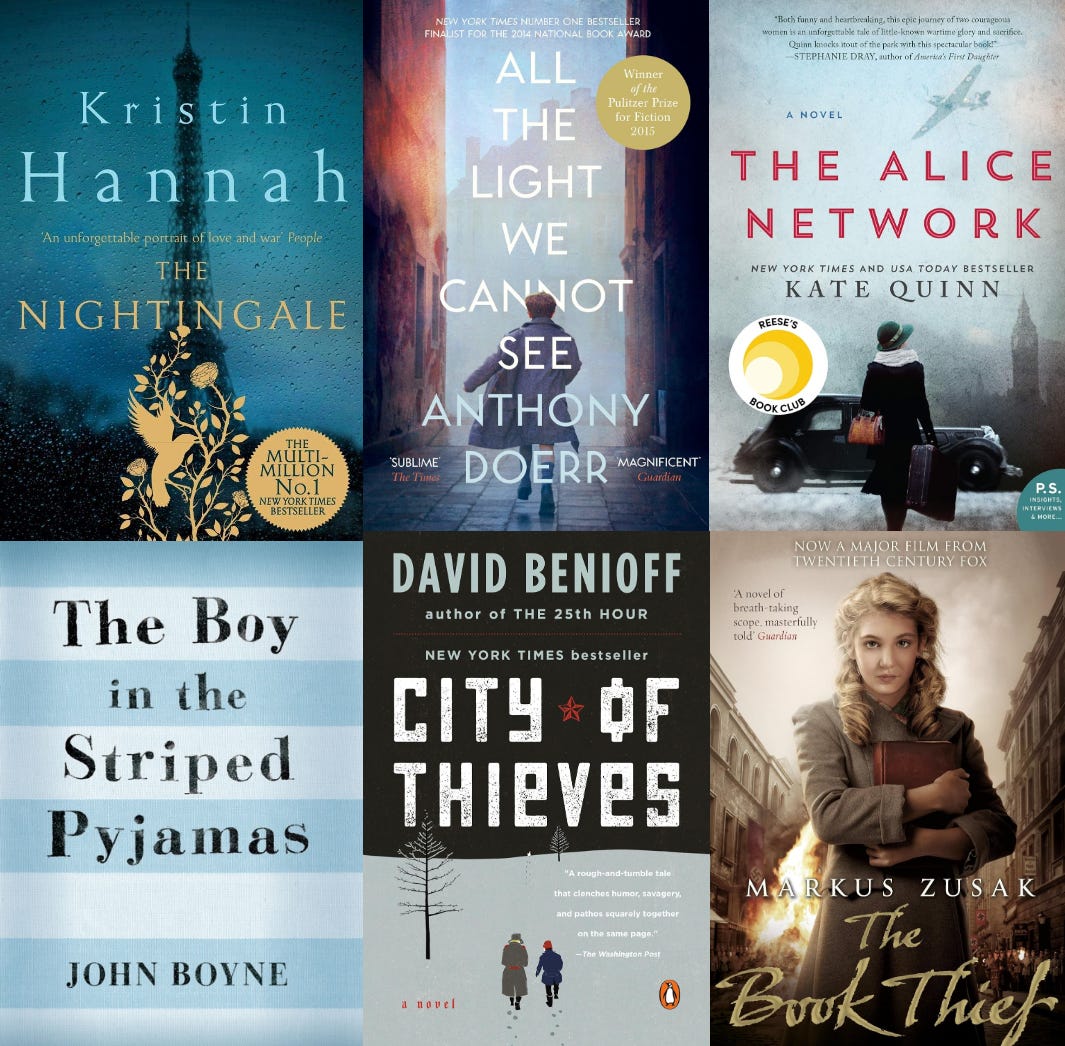
The ranks of Resistance heroines and female spies are now thicker in fiction than IRL. The World Wars create instant high stakes and high drama potential. I suspect the era is also relatable for us because our modern world developed out of it. We recognise the technologies and the social developments (e.g. women in the workforce, immigration, social mobility). This category has plenty of highly popular, gripping reads. The Holocaust fiction subset has a couple of my favourites:
6. Feminist Retellings
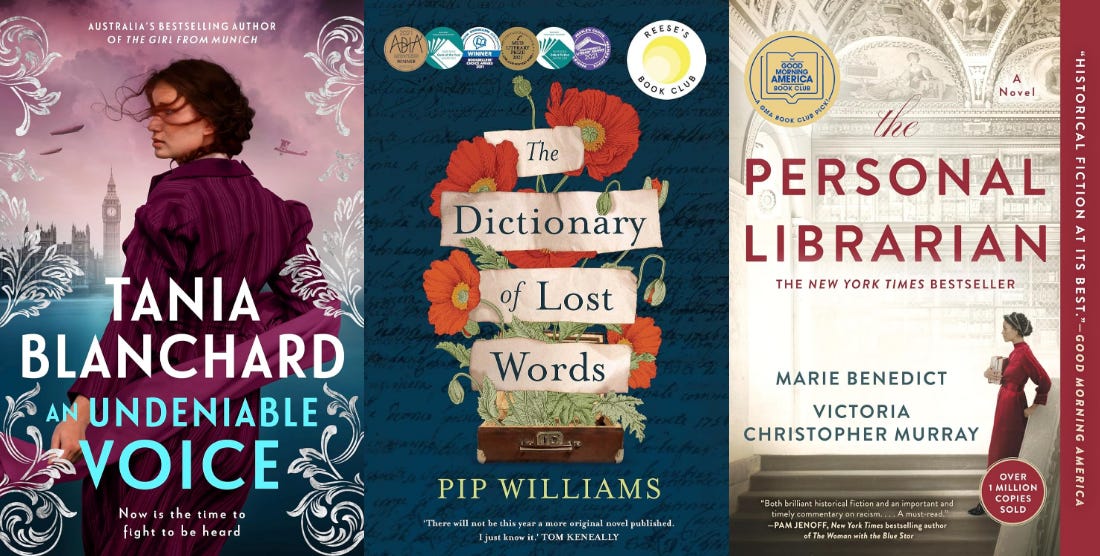
In recent years, historical fiction authors have made considerable efforts to redress past inequities around gender and colour. Strong female protagonists abound. So do stories about the women behind famous men or famous events. Great.
However, these novels often have an aftertaste of ideology. I strongly disagree with the moral positions many of these books now land on. I am tired of mean white men tropes. I do NOT think it is good for women to kill in revenge. I think ‘finding your voice’, as a woman’s ultimate life-goal, is self-absorbed. I think a future without men is misanthropic.
OK, enough of the rant. Let’s move on, to…
7. Historical Fantasy
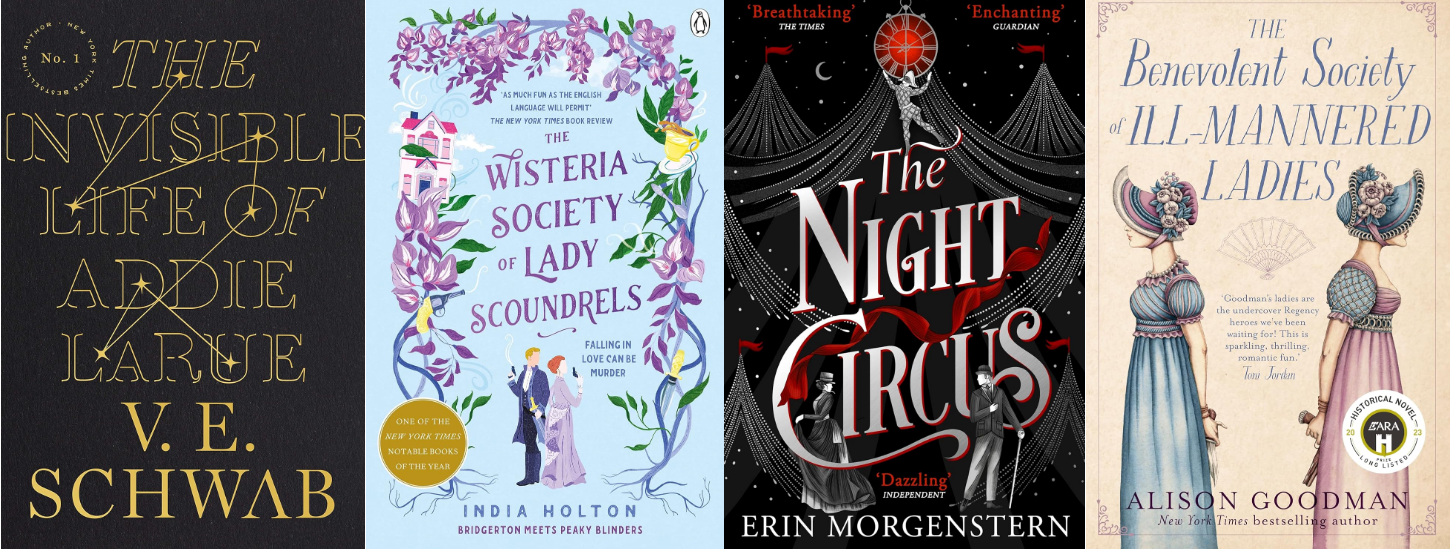
Think Gothic vibes with supernatural zing — cursed houses, mages in top hats. Is this historical fiction? Iffy. But if dual timeline counts (below), and Regency romance counts (above), so do these books. The light-hearted ones are really fun. The darker ones are really creepy. Not such a big genre, but I do enjoy them.
8. Mythic Retellings
Man vs monsters, man vs the gods, man vs man. Women vs all the above. Novels like Madeline Miller’s Circe turn ancient classics into modern fiction. David Malouf’s Ransom, in which King Priam goes outside the walls of Troy to beg for his son’s body, is short but deep and moving. Homer and the ancient bards knew how to tell stories. Their vivid characterisations, epic conflicts and powerful storylines undergird some masterful retellings.
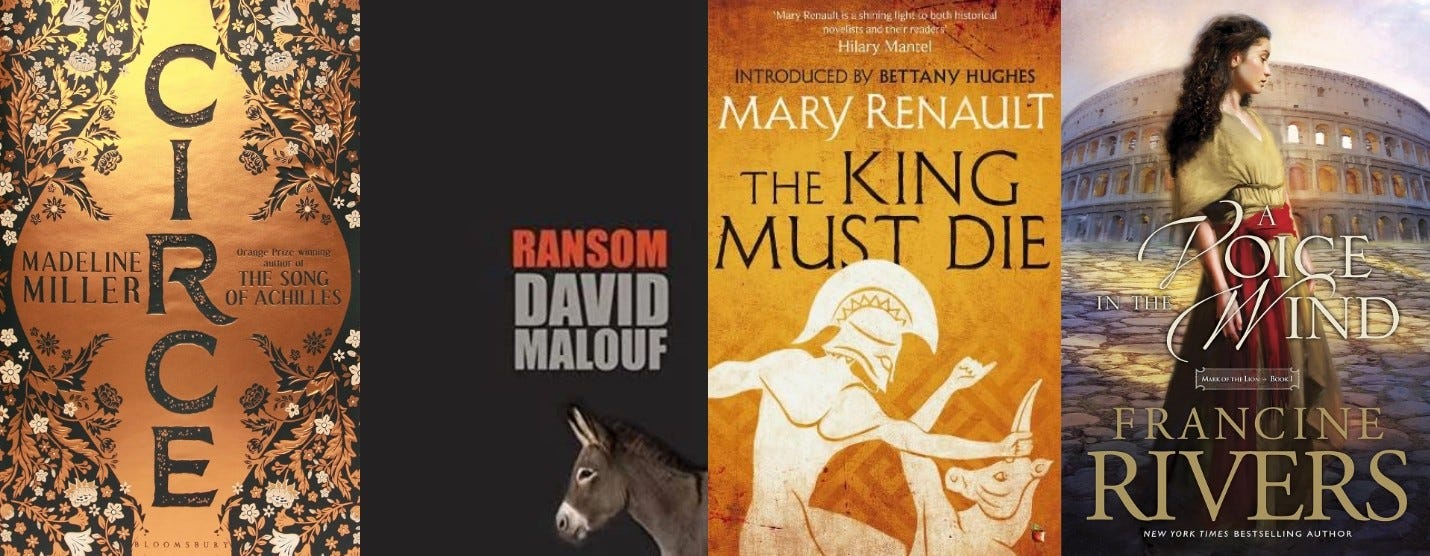
Biblical fiction is closely related in its ancient setting and supernatural elements, but it’s so different in tone. Bible stories have a rich history in western art and music. But most current fiction offerings are pencil sketches in comparison. In popular Biblical fiction, the historical setting is often hazy at the edges, and the characters aren’t too complex. The few literary novels in this genre disrespect the Biblical texts. The sex and violence of Christos Tsiolkas’ Damascus, for example, are grimey (and that’s understating it). Please change my mind! Tell me if you know a great book I should read.
9. Dual Timeline
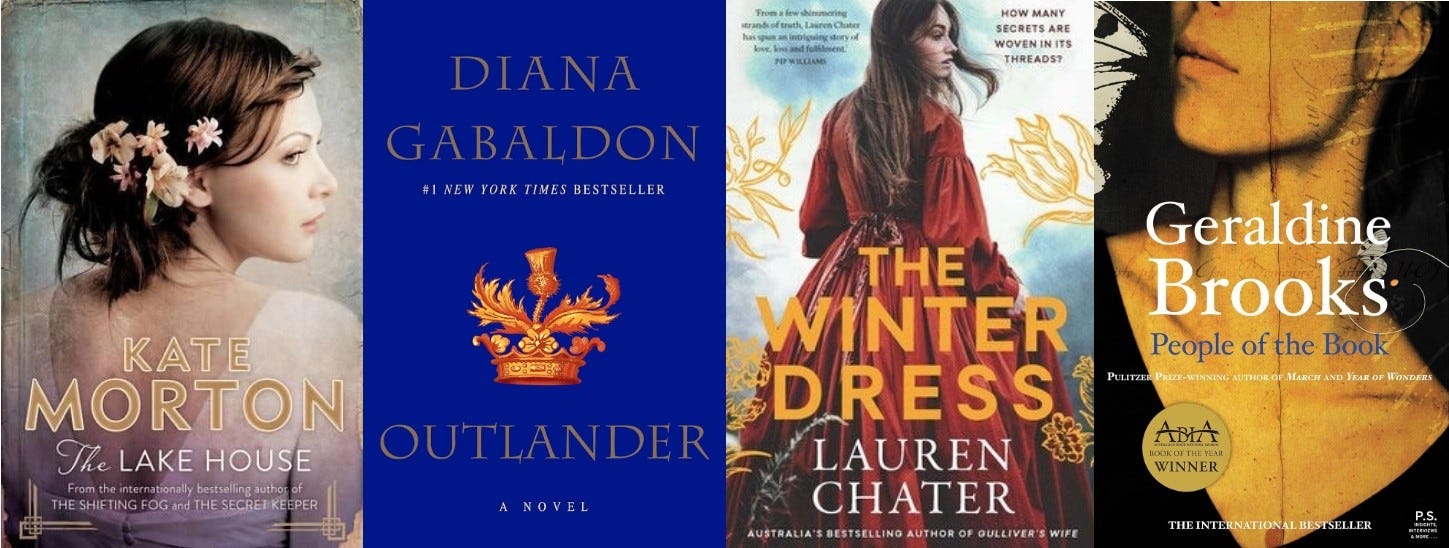
Dual timeline novels give you two stories for the price of one. Sometimes a modern character investigates the past — very often she finds a dusty box of letters, and the quest for past secrets begins. Other novels are sprinkled with timeslip magic, so the main character is whooshed back several centuries. People of the Book is a variation of this structure, which goes into the stories of people in the history of a manuscript, through multiple eras.
I haven’t yet found a dual timeline novel in which I was equally interested in both timelines. Usually the modern one is a bit bland, and one timeline or other is underdone.
10. Blockbuster Epics
Historical epics have dropped down bestseller ranks somewhat since late last century. But new blockbuster stories are still being published. Epic novels have a big cast of characters, and are often about the clash of armies, nations or cultures. And the older ones are very readable.
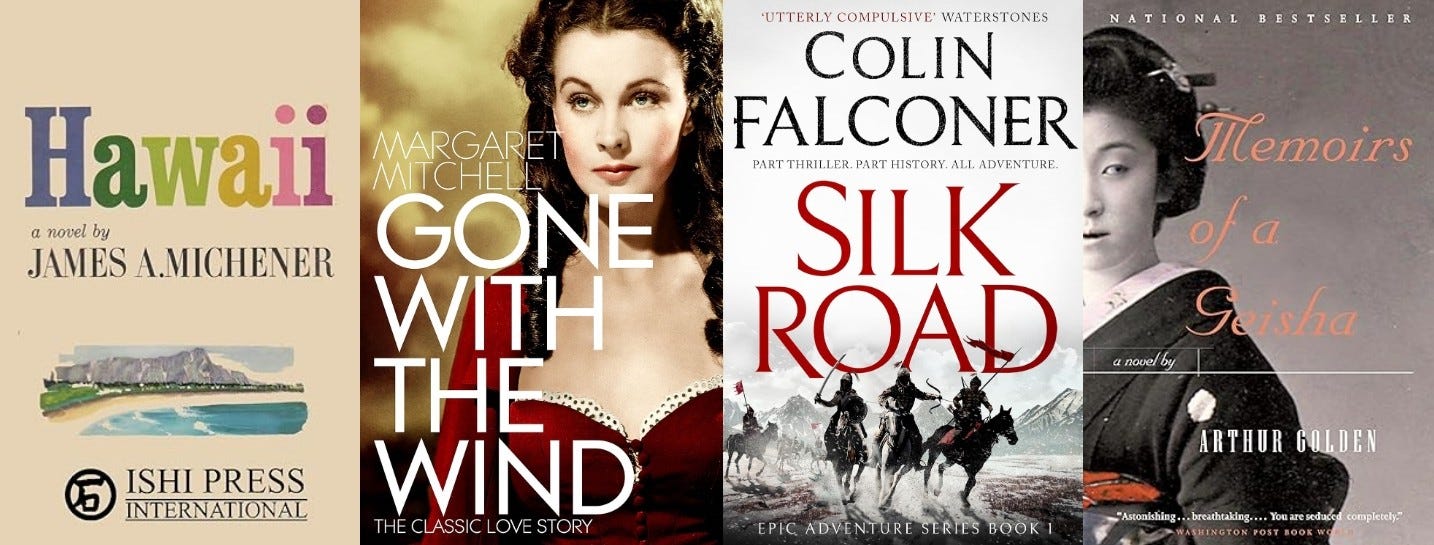
That’s it — the 10 major types of historical fiction! And some of their best examples.
Feel free to disagree with my liberally sprinkled opinions! I’d love to hear any favourite books of yours I’ve overlooked. I’m planning to cross-post this list on my website later, and I’ll gladly take your suggestions into account.
Interesting way to break it down! I think all of these are great for me with the right book!
They are all for me (except for #8). Bring me ALLLLLL the historical fiction :)